On leaving my first job in publishing

When I was a small child, whenever my mother was ferrying our family from place to place she would get us all to join in chanting the poem ‘We’re Going On A Bear Hunt’. You probably know it:

We’re going on a bear hunt, we’re going to catch a big one. What a beautiful day — we’re not scared!

This verse was so ubiquitous in my household that it was only years later, when I was working as a kindergarten teaching assistant, that I realised it was from a picture book by Michael Rosen and not something my mother made up. Nowadays whenever it pops into my head, which is often, I’m hit with a wave of nostalgia. Those words fill me with confidence, the sense that there’s a big wide world out there just waiting for me to explore. Those words make me brave.

One year ago, I started as an intern at the small independent picture book publisher Tiny Owl. I had previously only done two short work experience placements in publishing and I felt woefully underprepared. Finding your first role in publishing is notoriously difficult — I wish I had a secret trick to share but unfortunately it was just a case of sending out applications until I got lucky.

I’m incredibly grateful to the team at Tiny Owl, especially Commissioning Editor Sophie Hallam for showing so much kindness and patience towards someone just starting out in the industry. I’ve learnt so much in the past year, but most of all this job has reminded me to see picture books as valuable artistic and literary works in their own right. My own life has been hugely shaped by the books I read as a child – getting to play a part in creating the books that will shape the next generation has been a hugely rewarding experience. I will be leaving my job at the end of September, and venturing out into the unknown.

I don’t know where I’ll be going next, but I’m not scared.

On ‘Death Magazine’ by Matthew Haigh

Death Magazine by Matthew Haigh

Matthew Haigh’s poetry collection Death Magazine peels back the glossy exterior of ‘wellness’ culture to reveal the skull beneath the skin. Using Dadaist cut-up techniques, he has created an otherworldly mirror version of the lifestyle magazine that feels disturbingly familiar.

The collection is laid out like a magazine, with sections addressing different aspects of the human condition: fitness, lifestyle, beauty, wellness and advice. The ‘Fitness’ section comprises absurdist versions of male celebrities’ workout routines, their Patrick Bateman-esque weirdness satirising the unrealistic standards of masculine beauty offered by men’s magazines. In the ‘Wellness’ section, poems like ‘What Will Your Sims Do Now?’ explore the deep strangeness of the way we experience death in the contemporary era, now that we will all be outlived by our data footprint.

Haigh’s use of cut-up reaches heights of comic absurdity in ‘Interview with a New Father’, juxtaposing the bland soundbites attached to the idea of ideal fatherhood with the rawness of human vulnerability.

Death Magazine pushes back against the lie peddled by the lifestyle industry that with the right diet, fitness regime and skincare routine, death can somehow be evaded. These blackly humorous poems give an incisive yet touching look at what it means to be human in a post-human age.

A copy of the book was given to me by the author in return for an honest review. Buy a copy from Salt Publishing here.

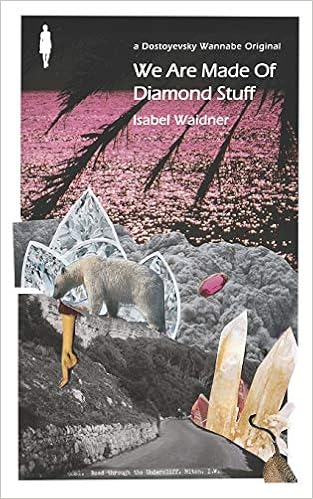
On ‘We Are Made of Diamond Stuff’ by Isabel Waidner

Image result for we are made of diamond stuff

Isabel Waidner’s We Are Made of Diamond Stuff came highly recommended from a friend, with the caveat that it was “quite weird”. I wasn’t disappointed.

Waidner’s protagonist — the unnamed 36 year old lookalike of Eleven from Stranger Things — and their friend Shae are both migrant workers struggling to survive in a characteristically grim off-season seaside town on the Isle of Wight. Their world stubbornly refuses to cohere into a single reality. Images of polar bears bleed from Shae’s jumper into the real world, Reebok classics transform into their animal namesake and start running around, and a character from BS Johnson appears in the form of their corrupt and tyrannical boss. (There’s a strong intertextual relationship with the novel House Mother Normal by the experimental writer BS Johnson, but you don’t need to have read it to understand what’s going on.)

Waidner’s absurd, darkly comic prose unflinchingly tackles the harsh reality of life for queer migrants pushed to the edges by Brexit Britain. The phrase “hostile environment” has never felt more apt. They also construct and incisive and sorely-needed critique of queer culture in UK, its co-opting by right wing movements and the impact of respectability politics. Diamond Stuff marks out the battle-lines in our increasingly confused and violent culture wars. In the face of all of this, its characters keep fighting.

No other novel I’ve read has so sharply captured the strangeness of our current political moment. The narrative refuses to resolve itself — there are no resolutions for the mess we’ve put ourselves in. Furiously preoccupied with the now, We Are Made of Diamond Stuff is set to be one of the defining novels of the Brexit era. Essential reading.

We Are Made of Diamond Stuff is published by Dostoyevsky Wannabe. You can buy the book here.

If you want to find out more I recommend listening to this great round-table discussion at the London Review Bookshop featuring Isabel Waidner.